Biofeedback in DGBI
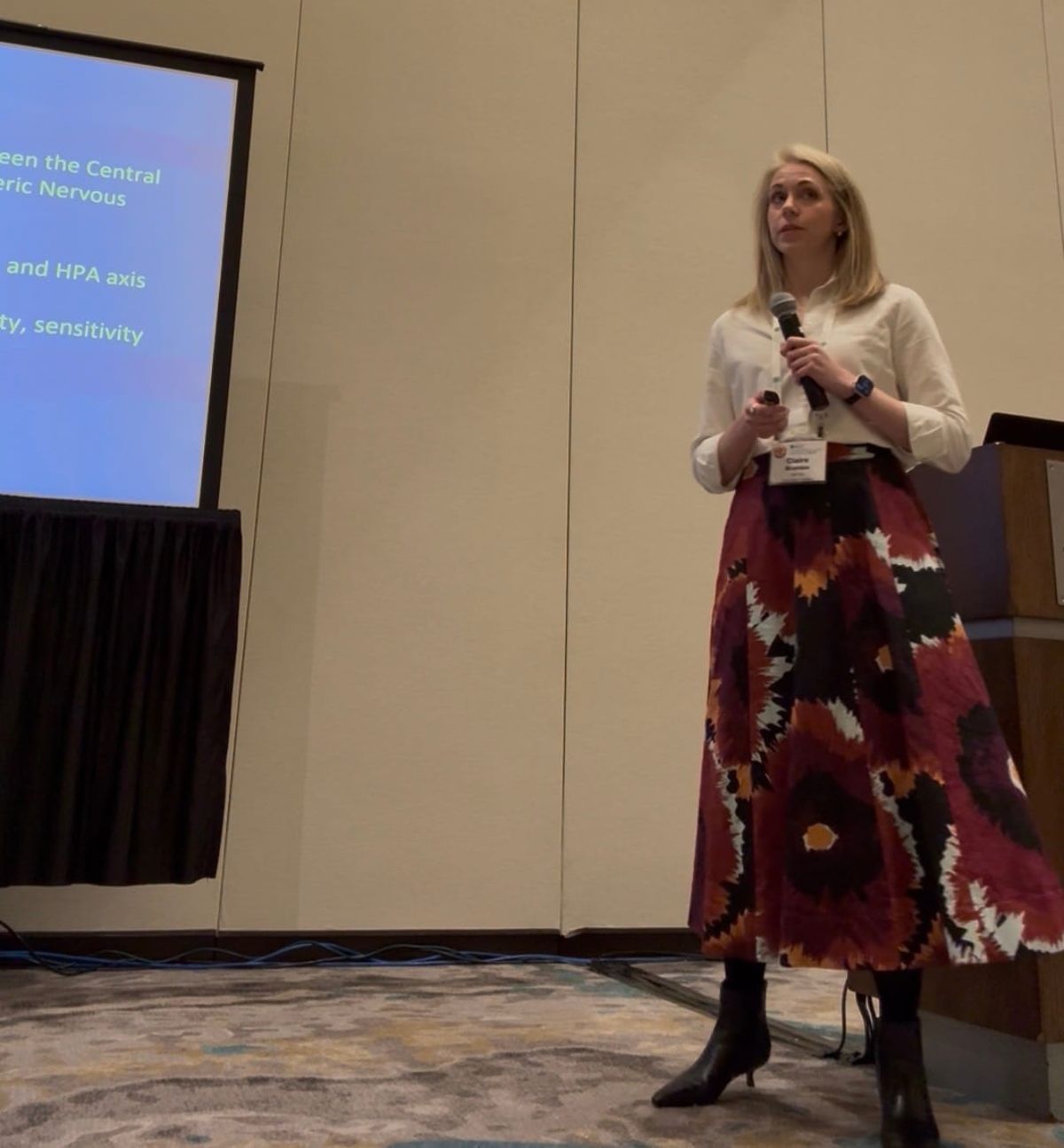
I was thrilled in November to share with my colleagues how biofeedback can be used in the outpatient setting for Disorders of the Gut–Brain Interaction (DGBI). The energy in the room was palpable, and I was genuinely moved by how many psychiatrists approached me afterward to learn more about how I integrate this work into my GI Psychiatry practice.
This is so exciting. Encouraging other physicians who are curious, open, and eager to help patients in new ways is exactly why I set aside a week each year to attend this conference—immersing myself in the conversations, learning from brilliant colleagues, and finding opportunities to connect, collaborate, and keep pushing our field forward.
What struck me most this year was how ready people are for a more integrative, physiologically informed approach to psychiatry. So many clinicians shared the same sense I have: that patients with complex GI–brain symptoms deserve tools that go beyond traditional models. Being able to offer them strategies grounded in physiology, psychology, and real-time self-regulation feels like a meaningful shift in how we care for them.
I also walked away with several new insights—ranging from emerging research on autonomic dysregulation to practical strategies for implementing biofeedback more efficiently in busy outpatient clinics. There were thoughtful discussions about barriers, surprising clinical cases, and ways we can better collaborate across specialties. I’ll be sharing more about these takeaways in the coming weeks, especially the pieces I think will be most relevant for clinicians and patients navigating DGBI every day.
I left the conference feeling recharged and deeply inspired. Every conversation reminded me why this work matters—why bridging psychiatry with the gut, the autonomic nervous system, and stress science is not just interesting, but necessary. It’s incredibly energizing to meet others who want to build this future together.
I’m already looking forward to continuing these discussions, sharing more from my clinical experience, and helping support colleagues who want to bring these tools into their own practices. There is so much momentum right now in the gut-brain space, and I feel grateful to contribute to a community that is curious, collaborative, and committed to improving patient care.
Talk Sh*t
Breaking down what's not working.
Where can you see a provider who does biofeedback? And how do you know if it’s right for you?
This is one of the most common questions I get—both from patients and, as I was reminded at the conference, from fellow psychiatrists. So many colleagues came up to me asking where to train, how to get certified, or how to find someone to refer their patients to. And the truth is…this is still a developing space. There aren’t enough trained providers, especially those who understand the intersection of stress, autonomic dysregulation, and Disorders of the Gut–Brain Interaction (DGBI).
So what do you do if you’re a patient trying to find help—or a clinician trying to guide someone toward it?
How to find reputable biofeedback providers
Biofeedback is offered across several different fields—behavioral health, physical therapy, psychology, and integrative medicine. But training, quality, and approach vary widely. Here’s where to start:
1. The Biofeedback Certification International Alliance (BCIA)
This is the closest thing we have to a gold standard. Providers certified in BCIA-accredited programs have met baseline training in psychophysiology, ethics, and supervised hours.
2. Psychiatrists trained in biofeedback (still rare, but emerging!)
This is the gap I hear about most. Psychiatry has been slow to adopt biofeedback, even though it aligns beautifully with what we treat—stress-related disorders, somatic symptoms, trauma physiology, sleep, and DGBI.
(Note: I expect this to grow rapidly over the next 5 years.)
3. Pelvic floor physical therapists
If your symptoms include constipation, pelvic floor dyssynergia, chronic straining, or pelvic pain, PTs trained in EMG biofeedback can be extremely helpful.
How do you know if biofeedback is right for you?
As a reminder, this is not medical advice but a few thoughts on whether or not biofeedback can be helpful:
- Your symptoms worsen with stress
- You notice gut symptoms (bloating, abdominal pain, constipation, urgency) during emotional distress
- You have trouble getting out of fight-or-flight mode
- You experience autonomic symptoms like dizziness, rapid heart rate, nausea, or fatigue
- You prefer treatments that give you skills rather than just medications
- You want a better understanding of what your body is actually doing in real time
- You’ve tried traditional approaches to anxiety or IBS, and still feel dysregulated
I like to describe biofeedback as “physical therapy for your nervous system.” It helps you retrain long-standing patterns of tension, breath-holding, gut–brain mismatch, and overactivation. And it works especially well for people with DGBI because those disorders are fundamentally conditions of miscommunication between brain, body, and gut.
Write in to newsletter@wholebodypsych.com to get your questions answered and to request new topics to be talked about. Make sure you subscribe to the newsletter so you don't miss a beat in the GI Psychiatry conversation.
Disclaimer: The information in this newsletter is for educational purposes only and is not medical advice. It is not a substitute for professional evaluation, diagnosis, or treatment. Always consult your physician or other qualified healthcare provider with any questions you may have regarding a medical condition.